Everything you know about your business lives in your head and nowhere else. Here you get it out — have ChatGPT interview you, use the shortcut to make it answer its own questions, then have it build your dossier and write the research prompt for the next tool.
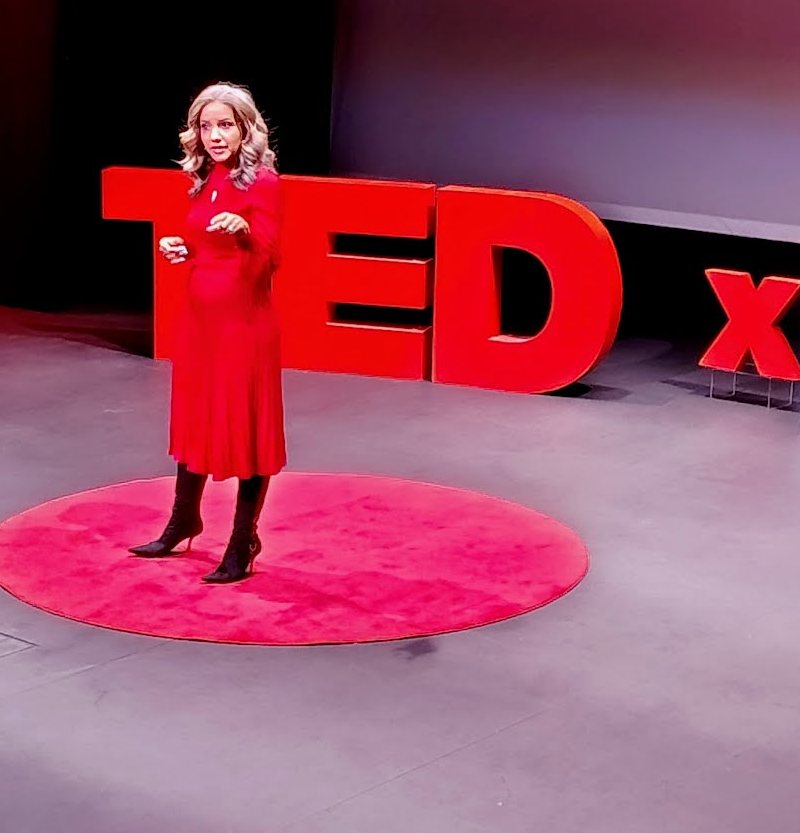
The MSP Summit · Orlando · 2026
Trust Forward.
Everything From the Session.
- Doing the whole workflow? Open the playbook and start with ChatGPT.
- Back for one thing? Pick your tool.
If you want the guided version
The 5-Minute Page Tour.
There is a lot here. This walks you through what everything is, what order to use it in, and which piece to start with today.
How the four steps work: each tool hands something to the next one. What comes out of Step 1 is what you paste into Step 2. That is why the steps are in this order, and why skipping one leaves the next with nothing to work from. Every document appears once — at the step that creates it.
The training
Four Steps. One Hand-Off at a Time.
Work through them in order. Each card holds the training video, what you do, the prompt you take forward, and the example from the demo so you can see what good looks like.
Upload your dossier, paste the prompt, and let it run. This is not research on a new market — it is research on the one you already serve. Where is the pressure, what would clients actually pay to solve, and which of your assumptions do not survive contact with evidence.
- ◆Deep Research DossierThe example from the demo, run with Deep Research switched on — slower, and considerably more sourced and specific. This is the version that made the 90-day plan worth building, and it is the mode Bethanie recommends you use.
- ◆Standard Research DossierThe same question from the demo, run as ordinary research instead. Open both side by side — the gap between them is the clearest argument there is for turning Deep Research on.
Load your own documents, then argue with the output. The constraint is what makes a plan real; generic plans fail because they quietly assume resources you do not have.
This step is longer than the others because it is where the thinking happens. Watch them in order — each one builds on the last.
- ◆The 90-Day Plan — AI Governance as a ServiceThe finished article from the demo: a named first cohort, week-by-week actions inside four CEO hours, delivery hour budgets, an objection matrix, scope guardrails, and two kill criteria with dates on them. Read it for the shape, then build your own.
- ◆Updated MSP AI Pressure TestWhat the plan looked like after it was argued with — the revised version produced during the training video. Compare it against the one above to see exactly what pushing back actually changes.
There is no new prompt to carry out of this step — Claude's output is the thing you take to Step 4.
Load your three documents as sources and turn the strategy into something your team can actually follow — a one-page methodology, a visual, and an audio overview they listen to on the drive in. A strategy your team cannot repeat is not a strategy. It is a document.
- ★Your team's methodology, visual and audio overviewThese are generated from your own documents, so there is nothing to download here — you build them in Notebook and they come out sounding like your business.
About the demo examples: every coral document on this page came from one composite MSP — 14 people, about 60 clients, CPA and accounting firms. The numbers and the vertical are that business, not yours, so they are reference material rather than something to copy forward. What travels is the shape. Most of these open as a Google Doc and offer to make you your own copy; the Strategic Dossier opens as a PDF to read.
Zoom out
The Best Fifteen Minutes on Where We Actually Are.
I did not make this one, and I am sharing it anyway. It is the clearest explanation I have seen of what this moment is and why it does not behave like the technology shifts we have already lived through.
Recorded 24 September 2026 for the Boston College Investment Committee, in response to the question: what is going on in the world of AI? Shared here because it is worth your time, not because I had anything to do with it.
-
1
This wave is coming for services, not software.
Early on he makes a point that stopped me cold. Every previous technology wave went after the software market. This one is going after the services market, which is roughly an order of magnitude larger.
Read that again if you run a services business. That single sentence holds both the threat and the opportunity, and which one it turns out to be for you depends entirely on whether you are delivering the change or being changed by it.
-
2
The gap he describes is where you already live.
He calls it the diffusion gap — the distance between what the models can do and what people are actually doing with them. He names it as the opportunity, and every startup in the Valley is trying to close it with product.
You can close it with a phone call. Your clients are already confused, they already trust you, and nobody has to earn that trust twice. That gap is not a problem for you. Handled properly, it is a business.
-
3
The floor keeps moving, so stop trying to win on tools.
He says application companies have to reinvent themselves roughly every four months because the technology floor shifts underneath them. That sounds like bad news until you sit with what it actually means.
Nobody wins this on tooling. The tool you master today is dated by spring. What does not reset every four months is the relationship — so build on the thing that compounds, and let the tools be tools.
He is talking to investors about where the money goes. I am talking to you about where the trust already is.
When you're ready
The Two Tools From the Horizon.
These are the ones from the end of the session — the part where the sales and marketing system starts running without you sitting at the desk. You do not start here. Finish the four steps above first, then come back when you want to build.
Lovable
Describe what you want and it builds the working site or app. This is how the sales page in the demo went live — no developer, no ticket, no six-week queue. Useful the moment your 90-day plan calls for a landing page you don't have.
Try Lovable →Marblism
Pre-built AI agents that handle the recurring work — outreach, follow-up, content, research — without you assembling anything from scratch. The out-of-the-box path to the command center from the last clip.
Try Marblism →Straight with you: those two links are affiliate links, and the discount attached to each one is the reason I use them rather than a plain link. If you'd rather not use them, go to lovable.dev and marblism.com directly — you'll just pay standard rates. Nothing on this page is behind them.
The framework
The ADOPT Method™
Five stages for moving an organization — yours, or your client's — from talking about AI to actually using it. This is the frame underneath the whole workflow.
- AAcknowledge the fearName what is actually in the room before you try to solve it — yours, your team's, and your client's.
- DDemystify the techUnderstand enough to ask the right question. Not more.
- OOwn your human edgeThe judgment you have built over a career is the scarce part. So is the trust.
- PPractice in communityNobody gets fluent alone.
- TTake your seatYour clients need a guide. Nobody hands out that seat — you claim it.
Who is talking
About Bethanie
35 Years at the Intersection of Technology and Human Potential.
- 35 Years in Technology
- 21,500+ Humans Trained
- 2,000 Certified AI Agents of Change
- 5,400 Five-Star Reviews
- 4,000 Recommendations
- CPD Accredited · Provider #22984
- SHRM Recertification Provider
I was a child with a file. Someone read it, made a determination about what I was worth, and wrote down a word that was not true. The system was wrong. It was wrong again years later, when it decided a high school diploma was as far as I would go.
Technology is what proved it wrong. I found it in a school library at nine years old, and it has been the thing that opened every door since — including the ones nobody meant to leave open for me.
I have trained more than 21,500 people and certified 2,000 AI Agents of Change, through programs accredited by the CPD Standards Office and recognized in over 70 countries. I have done this work inside IBM, Walmart, Morgan Stanley, LinkedIn, Blue Cross Blue Shield, Nielsen, and UKG.
My job has never been to turn anyone into an engineer. It is to make sure the person your clients already trust is the one standing beside them when this gets decided — and that she walks in with a plan, not just an opinion.
If you want more AI support
Three Ways I Can Help.
No pressure and no deadline. All three exist because people asked.
AI Experiences That Matter
Keynotes and workshops that leave people inspired rather than defeated — for your team, your client events, or your peer group. CPD-accredited, so attendees leave with credit as well as capability.
Start a Meaningful AI Conversation →Get Certified, and Stop Doing This Alone
The AI Agent of Change certifications, on replay at your own pace — plus the community of leaders working through the same questions you are. Practice in community is a stage of the method for a reason.
Become AI Agent of Change Certified →License the Whole Framework
Run this under your own name, for your own clients. License the full curriculum — including train-the-trainer certification so your people deliver it, LMS integration, and credentials built for your business. Your program, your brand, accredited outcomes you can put in front of a client.
Ask About Licensing →Nobody is unadoptable. Not then. Not now. Not your clients, either.Go be the guide.
Let's talk
You Do Not Have to Do This On Your Own.
If something in this session landed — a client conversation you have to lead, a service line you want to build, a team that needs to hear it from someone who is not you — tell me. I read every one of these myself.